What Makes a Good Breeding Cat?
Jun 16, 2026
One of the most common questions I hear from new breeders is, "What makes a good breeding cat?"
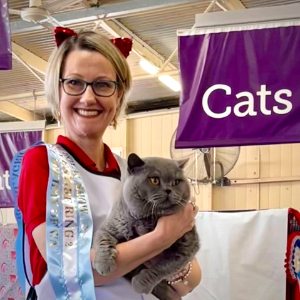
The interesting thing is that after more than 20 years of breeding cats, importing cats, showing cats, judging cats, and helping, new breeders get started my answer is probably very different from what most people expect.
Most people think a good breeding cat is the best cat. They imagine the perfect example of the breed standard from the perfect breeder, with a championship pedigree, beautiful photographs, and a long list of wins. They spend months searching for the perfect kitten, only to discover that the cat doesn't exist, isn't available, or comes with a price tag that makes their eyes water.
The reality is that a good breeding cat isn't necessarily the best breeding cat in the world. A good breeding cat is the cat that gives you what you need at that particular point in your breeding program.
When you're first starting out, the best breeding cat for you might simply be a healthy, well socialised cat from a breeder you trust. Ten years later, you might be looking for something completely different. You might need better tails. You might need stronger coat texture. You might need a new colour, a particular gene, a different temperament, or a way to move your breeding program in a new direction. What makes a good breeding cat changes depending on where you are in your journey.
I've always thought about breeding cats a bit like baking a cake. The kittens are the finished cake and the breeding cats are the ingredients. You don't use exactly the same ingredients every time because you're not always trying to create the same result. Instead, you choose the ingredients that will help you create the very best version of whatever you're trying to achieve. Breeding cats works in much the same way.
Some Of The Best Breeding Cats Don't Look Impressive
Nearly twenty years ago I imported two British Shorthairs from the United Kingdom. They were the first cinnamon carrying British Shorthairs imported into Australia. One was a fawn and white male and the other was a black female carrying cinnamon.
The female's name was Cindy and, if I'm being honest, she wasn't a particularly impressive looking British Shorthair. She was quite small. She had a sleek coat. She didn't really have the look that most people would expect when they picture a British Shorthair. She certainly wasn't the sort of cat that would stop people in their tracks at a cat show.
What Cindy did have was value.
She went on to produce a son named Teddy who became one of the most influential cats in my cinnamon breeding program. Not only did he make a significant contribution to my own breeding, she was also used in breeding Mandalay cats here in Australia. Nearly twenty years later, Cindy is still behind many of the cats in my pedigrees today.
She was also an easy cat to live with. She was healthy, she had a lovely nature, and she produced descendants that lived long lives. Looking back now, she was one of the most important breeding cats I've ever owned. Yet if somebody had judged her purely on how she looked, they might have completely overlooked her.
That experience taught me very early that the cats that make the biggest difference aren't always the cats that look the most impressive.
Sometimes The Most Impressive Cat Isn't The Best Breeding Cat
On the other hand, I think about Herbert.
Herbert is probably the best British Shorthair I've ever bred. He has fantastic type, a wonderful temperament, and an incredibly successful show career. If you asked me to describe my ideal British Shorthair, Herbert would be very close to it.
What surprised me was that despite all of those strengths, Herbert hasn't had the influence on my breeding program that I once expected he would. While I still have his descendants today, his overall contribution hasn't been nearly as significant as cats like Cindy.
If somebody had looked at Herbert standing on a show bench and compared him to Cindy, they probably would have assumed Herbert would become the far more important breeding cat. The reality turned out to be very different.
That's one of the biggest lessons breeding has taught me. A great cat and a great breeding cat are not always the same thing. Sometimes the cat that quietly shapes your breeding program for decades is the cat that nobody notices at first glance.
The Most Overlooked Trait Is Temperament
If there's one thing I wish more breeders paid attention to when choosing breeding cats, it's temperament.
I see breeders spend enormous amounts of money on cats with the right colour, the right pedigree, the right eye colour, the right coat, and the right type. They'll spend hours analysing photographs and pedigrees, yet never ask a single question about temperament.
That amazes me because a breeding cat isn't a photograph. It's a cat you're going to live with for years. It's a cat you need to handle. It's a cat you may want to show. It's a cat that may eventually retire and need to transition into a loving pet home.
I've seen breeders import cats that looked absolutely wonderful in photographs but arrived with poor temperaments. Some couldn't be shown. Some were difficult to handle. Some became lifelong management problems because they simply weren't suited to living as companion animals.
Whenever possible, I encourage people to see cats in person. If that isn't possible, ask for videos. Ask to see the cat being picked up. Ask to see the cat being patted. Ask to see it interacting with people. Ask to see it moving around its normal environment. Those videos often tell you far more than any carefully staged photograph ever will.
Before you're even thinking about purchasing a breeding cat, it's also worth making sure your current cat is actually ready for breeding. That's a different question entirely, but it's one that catches a lot of new breeders out. If you're at that stage, my article How Do I Know If My Cat Is Ready to Breed? is a good place to start.
Stop Buying Photographs
One of the biggest mistakes I see new breeders make is falling in love with photographs.
People can take incredible photographs. A kitten can be placed on a beautiful backdrop, posed perfectly, and photographed from exactly the right angle. The result can be absolutely stunning. The problem is that you're not buying a photograph. You're buying a living animal, and there are many things that a photograph simply can't tell you.
That cat might have a wonderful temperament, or it might not. It might be beautifully socialised, or it might not. It might be healthy and thriving, or it might have problems that aren't obvious in a photograph. None of that can be judged from a cute picture on social media.
This becomes even more important when you're buying from overseas breeders because you often can't visit in person. The more information you can gather beyond photographs, the better. Personally, I'd rather see a slightly awkward video of a kitten playing in its normal environment than a dozen professionally staged photographs. Reality is far more useful than marketing when you're making decisions that could affect your breeding program for years to come.
Starter Cats And Investment Cats
One thing I've always understood in my own breeding program is that not every breeding cat serves the same purpose.
Some cats are what I think of as starter cats. They're available. They fill a need. They help move your breeding program forward. They allow you to gain experience and keep progressing. They may not be the most exciting cat in the world, but they can still play a valuable role in helping you build the future you want.
In fact, I've created a video about starter cats and why I think they're so important for new breeders. If you've never heard the term before, or you're worried that your first breeding cat isn't "good enough", it's well worth watching.
Other cats are investment cats. These are the cats you've spent months researching. They're often more expensive. They may involve importing. They require significant planning, and they're often expected to make a major contribution to your breeding program.
The mistake I see many new breeders make is thinking every cat needs to be an investment cat. If you spend all your time chasing perfection, you can end up standing still. A successful breeding program is often built from a combination of both. Some cats become the foundation of your program. Others help you move one step closer to where you're trying to go.
This is one of the topics we talk about regularly inside my New Cat Breeders Club because understanding the difference between a starter cat and an investment cat can save new breeders a lot of money, stress, and disappointment.
Looking Beyond The Individual Cat
Another thing I've come to value over the years is understanding the cats behind the cat.
It's one thing to buy an individual cat that looks fantastic. It's another thing entirely to understand the family that produced it. Sometimes breeders own the parents, grandparents, and even great grandparents. They know what those cats produce. They know the strengths and weaknesses that tend to appear. They know how those lines mature over time.
That information can be incredibly valuable because you're not simply buying the cat standing in front of you. You're also investing in the genetic potential behind that cat. Sometimes a slightly less impressive cat from a well understood family can be a much safer breeding choice than a spectacular looking cat that turns out to be a one hit wonder.
Final Thoughts
When people ask me what makes a good breeding cat, they're often expecting a checklist. The truth is that there isn't one.
A good breeding cat is the cat that gives you what you need at that moment in your breeding journey. Sometimes that's a cat with a specific genetic trait. Sometimes it's a cat with a wonderful temperament. Sometimes it's a cat that introduces a new colour. Sometimes it's a cat that helps improve a weakness you've identified in your breeding program. And sometimes it's simply the cat that allows you to get started.
The longer I breed, the less interested I become in finding the perfect cat and the more interested I become in finding the right cat. In my experience, that's where the real magic happens.
If you're new to breeding and looking for practical advice, resources, courses, and support, you'll find plenty of help throughout my website. My goal has always been to help new breeders avoid expensive mistakes, make better decisions, and enjoy the journey of breeding healthy, happy cats.
Hey New Cat Breeders
Starting out can feel confusing. You’re clearly someone who cares about doing right by your cats, and that already puts you ahead of most. Amazing breeders don’t start perfect, they start supported.
⭐️NEW CAT BREEDERS CLUB⭐️
Clear guidance, practical knowledge, and a community that helps you make better breeding decisions from day one. It’s the kind of place you land and think, “Wow, this actually makes a difference.”
If you want more confidence, healthier litters, smarter choices, and kittens you can feel proud of, this is your next click.
Be Calm, Confident and Prepared on Birthing Day
Don’t Risk Being Unprepared When Your Queen Gives Birth
Download my free checklist and make sure you’re calm, confident, and ready when the big moment arrives.
Meet The Author